
Façades: Understanding Tolerances in Construction
In façade works, precision is important — but so is understanding tolerances.
No structure is ever perfectly straight, level, or identical to drawings on paper. Minor variations naturally occur during construction, especially across large and complex buildings. This is why façade systems are engineered with allowable tolerances to accommodate practical construction conditions while maintaining performance, alignment, and overall visual consistency.
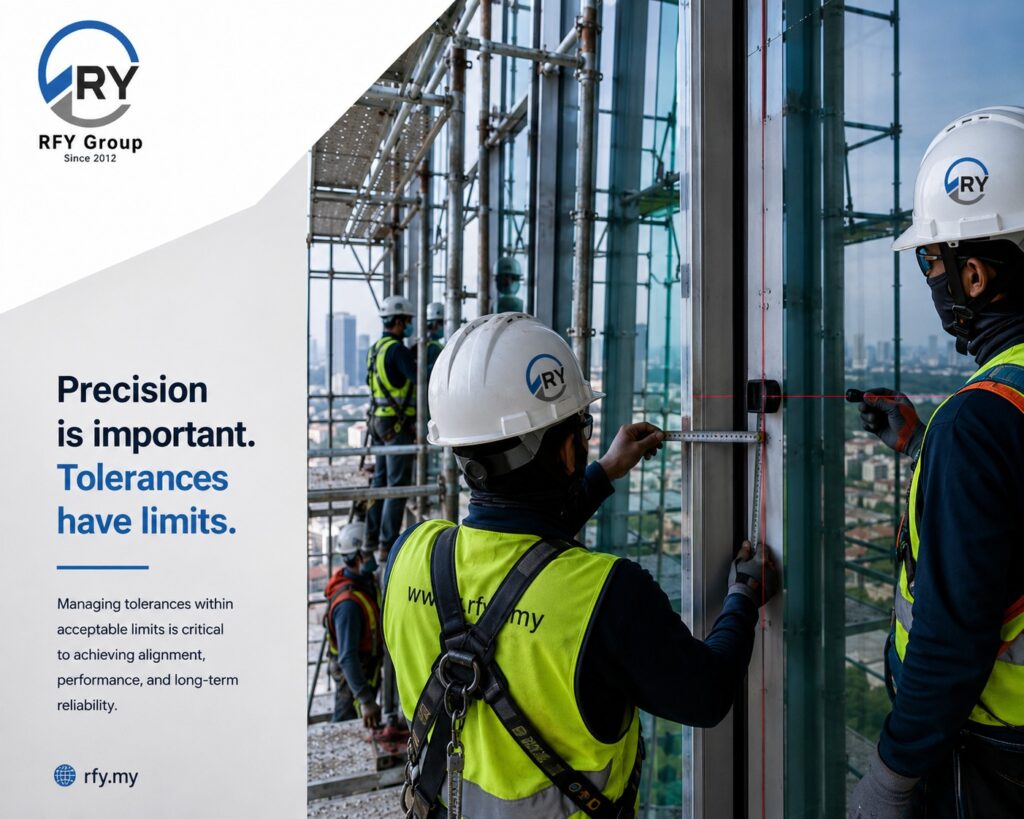
However, tolerances are not unlimited.
When structural deviations exceed acceptable limits, challenges can arise during installation, affecting interfaces, sequencing, façade alignment, and finishing quality. In more severe cases, excessive tolerances may also impact safety, performance, and long-term durability.
This is where early coordination, proper quality control, and timely corrective actions become critical.
Good façade engineering is not about assuming perfect site conditions — nor accepting uncontrolled deviations. It is about designing and executing systems within controlled and coordinated tolerances to achieve the intended outcome reliably.
As buildings become increasingly sophisticated, tolerance management becomes an essential part of successful façade delivery.
#FacadeInsightByRFY #ConstructionTechnology